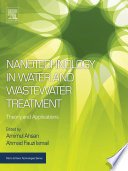
Nanotechnology in Water and Wastewater Treatment
Theory and Applications
by Amimul Ahsan
Pages
409
Reading Level
Intermediate
Est. Time
10.2 hrs
Description
Nanotechnology in Water and Waste Water Treatment: Theory and Applications explores the unique physicochemical and surface properties of nanoparticles and highlights the advantages they provide for engineering applications. Applications covered include the generation of fresh water from surface water and seawater, the prevention of the contamination of the environment, and the creation of effective and efficient methods for remediation of polluted waters. Each chapter covers a different nanotechnology-based approach and examines the basic principles, practical applications, recent breakthroughs and associated limitations. This book is ideal for researchers and professionals in the fields of nanotechnology, water treatment and desalination. In addition, it is also ideal for postgraduate students, industry and government professionals, managers and policymakers. - Gathers together the latest research and developments in the field from journal articles and conference proceedings - Discusses and evaluates the most economical and low cost treatment technologies - Presents information from related fields on the applicability, strengths and weaknesses of particular nanomaterials in key applications, thus allowing for the continuation and expansion of research in a range of fields
ISBN-13: 012813903X
Publisher: Elsevier
Language: English
Publish Year: 2018
AI Synthesis & Core Summary
Amimul Ahsan's "Nanotechnology in Water and Wastewater Treatment" comprehensively explores the transformative potential of nanotechnology in addressing the escalating global water crisis. The book meticulously details how conventional water treatment methods often fall short in removing emerging contaminants, pathogens, and recalcitrant pollutants, thereby necessitating innovative solutions. It introduces a diverse array of nanomaterials, including carbon-based nanomaterials (carbon nanotubes, graphene), metal and metal oxide nanoparticles (silver, titanium dioxide, zero-valent iron), and polymeric nanomaterials, showcasing their unique properties like high surface area, enhanced reactivity, and tunable selectivity that make them superior candidates for advanced purification processes.
The core of the book delves into the specific applications and mechanisms through which these nanotechnologies operate. It elaborates on nanoadsorption for efficient removal of heavy metals and organic dyes, nanofiltration and membrane technologies that offer superior separation capabilities with reduced fouling, and photocatalysis using semiconductor nanomaterials for the degradation of persistent organic pollutants. Furthermore, the book discusses the development of nanosensors for real-time, highly sensitive detection of contaminants, emphasizing how these diverse approaches collectively contribute to more effective, energy-efficient, and sustainable water and wastewater treatment systems compared to traditional methods.
Finally, the book critically examines the challenges and future directions for the widespread implementation of nanotechnology in this field. It addresses crucial aspects such as the cost-effectiveness, scalability of manufacturing and application, potential environmental implications and ecotoxicity of nanomaterials, and the need for robust regulatory frameworks. By highlighting the interdisciplinary research required and the importance of life cycle assessment, Ahsan's work provides a balanced perspective on both the immense promise and the significant hurdles that must be overcome for nanotechnology to fulfill its potential in securing clean water resources for future generations.
AI Concept Mind-Map
Get This Book
Looking to add this masterpiece to your bookshelf? Compare prices and buy directly using our trusted partners:
🔔 Get Price Drop Alerts
Enter your email to receive an instant notification when this book's price drops on Amazon or Flipkart.
As an Associate, BOOKLOVE earns from qualifying purchases. Read our full Affiliate Disclosure.
Critical Lessons & Takeaways
- Nanotechnology offers superior efficiency and selectivity in removing a wide range of contaminants from water.
- Different classes of nanomaterials possess unique properties suitable for specific treatment processes like adsorption, filtration, or photocatalysis.
- Nano-membranes are revolutionizing water purification by providing enhanced separation performance and reduced energy consumption.
- Photocatalytic nanomaterials enable effective degradation of persistent organic pollutants, offering a sustainable alternative to chemical treatments.
- The successful and safe deployment of nanotechnology in water treatment requires addressing scalability, cost-effectiveness, and potential environmental impacts through rigorous research and policy.
Famous Quotes & Key Sayings
- "Nanotechnology is poised to revolutionize water and wastewater treatment by offering unprecedented efficiency and selectivity in contaminant removal, addressing limitations of conventional methods."
- "The unique physicochemical properties of nanomaterials, such as high surface area and quantum effects, provide the foundation for their superior performance in pollutant degradation and detection."
- "While the promise of nanotechnological solutions for water scarcity is immense, their practical implementation hinges on overcoming challenges related to scalability, economic viability, and rigorous assessment of environmental safety."
- "Understanding the intricate interactions between engineered nanomaterials and diverse aquatic pollutants is paramount for designing robust, sustainable, and next-generation water purification systems."
Key Figures & Characters
AI Book Assistant
Ask about quotes, characters, lessons...
Offline Study Companion
Download the complete AI Summary and Critical Lessons as a beautifully formatted PDF to read offline.
📅 Create AI Reading Plan
Generate a week-by-week timeline custom-tailored to your learning goals and timeline.
Community Reviews (0)
No reviews posted yet. Be the first to share your thoughts!
Similar Books & Comparisons
Fish Roe

Clean Code
The Lean Startup