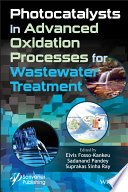
Photocatalysts in Advanced Oxidation Processes for Wastewater Treatment
by Elvis Fosso-Kankeu
Pages
320
Reading Level
Intermediate
Est. Time
8 hrs
Description
Photocatalysts in Advanced Oxidation Processes for Wastewater Treatment comprehensively covers a range of topics aiming to promote the implementation of photocatalysis at large scale through provision of facile and green methods for catalysts synthesis and elucidation of pollutants degradation mechanisms. This book is divided into two main parts namely “Synthesis of effective photocatalysts” (Part I) and “Mechanisms of the photocatalytic degradation of various pollutants” (Part II). The first part focuses on the exploration of various strategies to synthesize sustainable and effective photocatalysts. The second part of the book provides an insights into the photocatalytic degradation mechanisms and pathways under ultraviolet and visible light irradiation, as well as the challenges faced by this technology and its future prospects.
ISBN-13: 1119631394
Publisher: John Wiley & Sons
Language: English
Publish Year: 2020
AI Synthesis & Core Summary
This book provides a comprehensive overview of photocatalysis as a robust advanced oxidation process (AOP) for wastewater treatment, addressing the global challenge of water pollution from persistent organic pollutants, pharmaceuticals, and industrial effluents. It meticulously details how semiconductor materials, when exposed to light, generate electron-hole pairs that initiate a series of redox reactions. These reactions lead to the formation of highly reactive species, predominantly hydroxyl radicals, capable of mineralizing a wide array of recalcitrant contaminants into less harmful byproducts like carbon dioxide and water. The core thesis underscores the potential of photocatalytic AOPs to offer a sustainable and environmentally friendly alternative or complement to conventional wastewater treatment methods, which often fall short in degrading complex or emerging pollutants.
The text delves into the fundamental principles governing photocatalytic processes, including light absorption, charge separation and recombination, and surface reaction kinetics. It explores various types of photocatalysts, with a significant focus on titanium dioxide (TiO2) due to its excellent photoactivity, stability, non-toxicity, and cost-effectiveness. Furthermore, the book examines strategies for enhancing photocatalytic efficiency, such as doping with metals or non-metals, surface modification, heterojunction formation, and the development of novel composite materials to improve light absorption in the visible spectrum, reduce electron-hole recombination, and increase catalyst stability and reusability. It also covers the design and optimization of photocatalytic reactors, considering factors like light intensity, catalyst loading, pH, and the presence of radical scavengers, which are crucial for practical applications.
Beyond theoretical aspects and material science, the book extends to the practical applications and challenges associated with implementing photocatalytic AOPs in real-world wastewater treatment scenarios. It discusses case studies, performance evaluation metrics, and the advantages and limitations of this technology, including issues such as catalyst separation, potential secondary pollution from intermediates, and scalability for large-volume industrial effluents. Ultimately, "Photocatalysts in Advanced Oxidation Processes for Wastewater Treatment" serves as a critical resource for researchers, engineers, and environmental scientists, providing insights into the current state-of-the-art and future directions for developing efficient, economically viable, and sustainable photocatalytic solutions for global water scarcity and pollution problems.
AI Concept Mind-Map
Get This Book
Looking to add this masterpiece to your bookshelf? Compare prices and buy directly using our trusted partners:
🔔 Get Price Drop Alerts
Enter your email to receive an instant notification when this book's price drops on Amazon or Flipkart.
As an Associate, BOOKLOVE earns from qualifying purchases. Read our full Affiliate Disclosure.
Critical Lessons & Takeaways
- Photocatalysis offers a highly effective and environmentally benign approach for degrading persistent organic pollutants in wastewater.
- The selection and engineering of semiconductor photocatalysts (e.g., TiO2, ZnO) are critical for optimizing efficiency, stability, and visible light responsiveness.
- Understanding the fundamental mechanisms of radical generation and pollutant degradation is essential for developing advanced photocatalytic systems.
- Practical implementation requires careful consideration of reactor design, operational parameters, and strategies for catalyst recovery and reuse.
- Integrating photocatalytic AOPs with other treatment technologies can create more robust and comprehensive wastewater treatment solutions.
Famous Quotes & Key Sayings
- "Photocatalysis represents a frontier technology in the persistent battle against emerging contaminants in aquatic environments."
- "The judicious engineering of semiconductor materials is paramount to unlocking the full potential of advanced oxidation processes for sustainable wastewater purification."
- "Effective wastewater treatment in the 21st century demands innovative solutions that transcend traditional methodologies, a niche perfectly suited for photocatalytic degradation."
- "The promise of photocatalysis lies not only in its degradative power but also in its potential for harnessing renewable solar energy for environmental remediation."
Key Figures & Characters
AI Book Assistant
Ask about quotes, characters, lessons...
Offline Study Companion
Download the complete AI Summary and Critical Lessons as a beautifully formatted PDF to read offline.
📅 Create AI Reading Plan
Generate a week-by-week timeline custom-tailored to your learning goals and timeline.
Community Reviews (0)
No reviews posted yet. Be the first to share your thoughts!
Similar Books & Comparisons

Fish Roe

Clean Code
The Lean Startup