AI Head-to-Head
Compare The Lean Startup vs A Brief History of Time
Which book deserves a spot on your reading list next? Explore our side-by-side comparison of summaries, lessons, and buying options.
Business
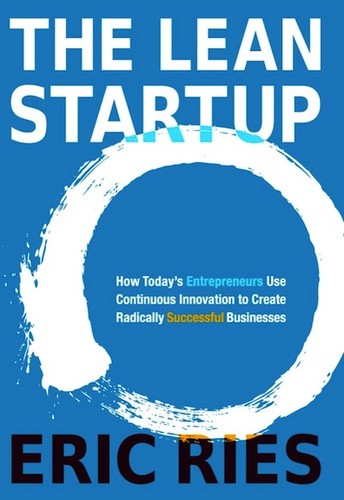
The Lean Startup
by Eric Ries
★★★★★
5.0
Buy Options
| Pages | 336 |
| Difficulty Level | Intermediate |
| Est. Reading Time | 8.4 hrs |
| Publish Year | 2011 |

Academic
A Brief History of Time
by Stephen Hawking
☆☆☆☆☆
0.0
Buy Options
| Pages | 212 |
| Difficulty Level | Advanced |
| Est. Reading Time | 5.3 hrs |
| Publish Year | 1988 |
🎯
Who Should Read Which?
Book 1, "The Lean Startup," is targeted at entrepreneurs, startup founders, product managers, innovators, and anyone involved in building new products or businesses in a fast-paced environment. Book 2, "A Brief History of Time," is aimed at a general audience with an intellectual curiosity about the universe, cosmology, and fundamental physics, even those without a scientific background.
💡
Core Takeaway Comparison
The core takeaway of "The Lean Startup" is the importance of validated learning, continuous innovation through Build-Measure-Learn feedback loops, and iterating quickly based on customer feedback to build sustainable businesses. "A Brief History of Time" aims to demystify complex scientific theories about the origin, structure, and fate of the universe, including concepts like the Big Bang, black holes, and the nature of space-time, making them accessible to a broader audience.
✍️
Writing Style & Complexity
Book 1 employs a practical, instructional, and business-focused writing style, often using case studies and examples to illustrate its methodologies. It is direct and actionable. Book 2 uses an explanatory, authoritative, and intellectual style, striving for clarity and accessibility despite the profound complexity of its subject matter, often relying on analogies to simplify abstract concepts.
👑
The Final Verdict
If your goal is to understand modern business development, entrepreneurship, and product innovation, start with "The Lean Startup." If you seek to expand your scientific understanding of the cosmos, fundamental physics, and the nature of existence, then "A Brief History of Time" is the one to read first. They cater to entirely different interests and learning objectives.