AI Head-to-Head
Compare The Lean Startup vs Godel, Escher, Bach
Which book deserves a spot on your reading list next? Explore our side-by-side comparison of summaries, lessons, and buying options.
Business
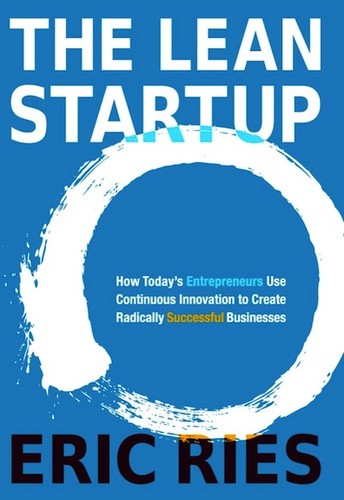
The Lean Startup
by Eric Ries
★★★★★
5.0
Buy Options
| Pages | 336 |
| Difficulty Level | Intermediate |
| Est. Reading Time | 8.4 hrs |
| Publish Year | 2011 |

Science & Technology
Godel, Escher, Bach
by Douglas Hofstadter
☆☆☆☆☆
0.0
Buy Options
| Pages | 777 |
| Difficulty Level | Advanced |
| Est. Reading Time | 19.4 hrs |
| Publish Year | 1979 |
🎯
Who Should Read Which?
The Lean Startup is ideal for entrepreneurs, startup founders, product managers, and anyone in a business context looking for practical strategies to build and scale products efficiently. Godel, Escher, Bach is for readers with a strong interest in philosophy, mathematics, computer science, artificial intelligence, music, art, and cognitive science, seeking a deep intellectual exploration of complex systems and the nature of mind.
💡
Core Takeaway Comparison
The Lean Startup's core takeaway is the importance of validated learning, continuous experimentation through the Build-Measure-Learn feedback loop, and the use of Minimum Viable Products (MVPs) to rapidly iterate and adapt in uncertain business environments. Godel, Escher, Bach explores the profound concepts of self-reference, recursion, formal systems, consciousness, and intelligence, demonstrating how these ideas interweave across logic, art, and music, challenging traditional views on complex systems.
✍️
Writing Style & Complexity
The Lean Startup employs a practical, direct, and prescriptive writing style, using case studies and actionable advice accessible to a business audience. It focuses on methodology and implementation. Godel, Escher, Bach is highly interdisciplinary, intellectual, playful, and often recursive in its structure, utilizing dialogues, analogies, and intricate explanations. Its density and abstract nature make it significantly more challenging and demanding of the reader's intellectual engagement.
👑
The Final Verdict
If your goal is to gain actionable strategies for innovation, entrepreneurship, or product development, start with "The Lean Startup" for its immediate practical value. If you are seeking profound intellectual stimulation, enjoy philosophical puzzles, and are prepared for a challenging but deeply rewarding journey into the nature of intelligence, logic, and self-reference, then "Godel, Escher, Bach" is the one to pick. The choice depends entirely on whether you prioritize practical application or deep theoretical exploration.